Connecting All on Our Incredible Blue Planet
22 November – 12 December 2023

The third ever Virtual Ocean Pavilion (VOP) was held from November 22 until December 12, 2023, opening ahead of the 28th session of the Conference of the Parties to the United Nations Framework Convention on Climate Change (UNFCCC COP28, 30 November – 12 December 2023) and lasting for its duration. With the overall coordination by the Global Ocean Forum (GOF) in close partnership with the Plymouth Marine Laboratory (PML), it was co-organized by the GOF and PML together with 15 collaborating partners.
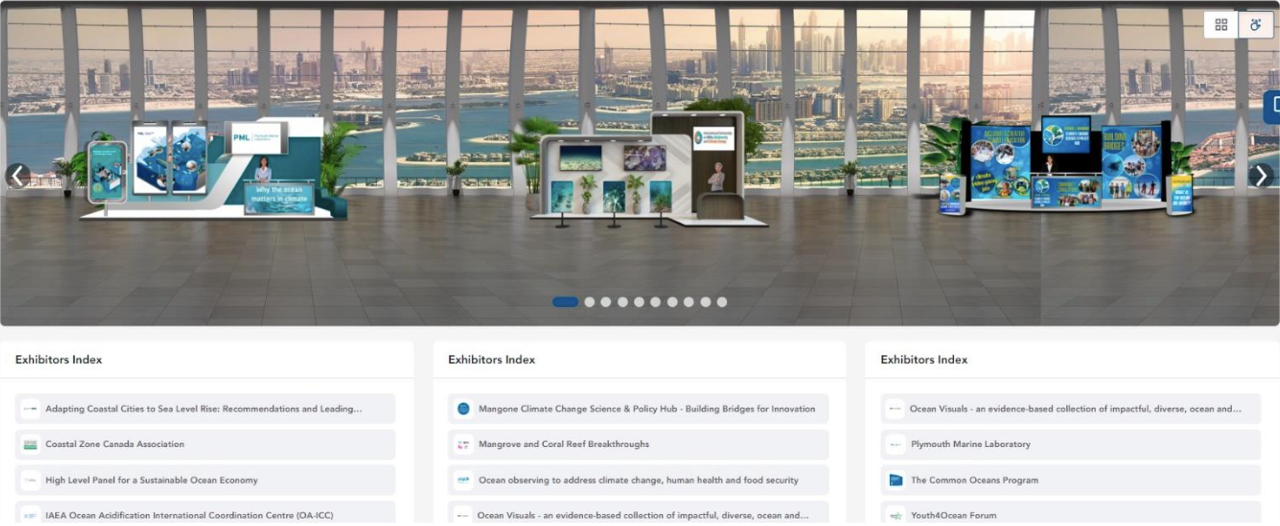
The virtual pavilion environment was designed to mimic a physical event hall with a lobby featuring ocean graphics where participants could navigate the platform and access features including the COP28 Ocean Events Tracker, Treasure Trove, Pavilion Agenda, info desk, a Pavilion quiz, youth-led Interviews, an exhibit hall housing 12 exhibition booths; and an auditorium where visitors could attend webinars in person or view webinar recordings on demand. The Pavilion drew 1,265 registrations, representing 112 countries, of which 605 (48%) logged in to visit the Pavilion and participate in its various features within the duration of the Pavilion (22 November – 12 December 2023, including a post-event hosting period from 12 December 2023 – 12 January 2024).
ABOUT THE COP28 VIRTUAL OCEAN PAVILION
The COP28 Virtual Ocean Pavilion was an online platform dedicated to raising the visibility of the ocean and showcasing why the ocean matters in climate negotiations and to all life on our planet. It aimed to increase knowledge, commitment, and action for the ocean-climate nexus during and at key events in the run up to the UN Climate Conference (COP28) by providing an accessible and climate-friendly option for participation and engagement.


PAVILION HIGHLIGHTS
Highlight 1: Registrants from over 100 countries engaged with the COP28 Virtual Ocean Pavilion and collaborating partners included intergovernmental organizations, non-profit organizations, governments and academic institutions. A diverse range of both collaborating partners and attendees is something strived for by the Pavilion organizers and we are pleased to say that COP28’s VOP delivered.
Highlight 2: The COP28 Virtual Ocean Pavilion provided a climate-friendly alternative to attending COP28 in-person. As concerns for the climate grow, it is important that low-carbon options such at the Virtual Ocean Pavilion are made available not only to democratize who can participate in UNFCCC processes but also to provide an alternative for those who wish or plan to participate but do not want to increase their carbon footprint by doing so. The COP28 VOP is proud to say that through its virtual platform, substantial carbon emissions were saved.

PAVILION FEATURES
Live Events
Eight live events were conducted during COP28 under the Pavilion, which featured eminent high level speakers from national and regional organizations, intergovernmental organization representatives, ocean and climate experts, and youth leaders from around the world. The events, which were conducted as webinars, addressed science, finance, partnership and capacity building, public education, collaboration and coordination with a focus on strengthening ocean and climate action as well as securing a place for the ocean in the climate negotiations. Visit the Global Ocean Forum’s YouTube Channel or click on any of the links below to watch recordings of the live events. For more information on the live events, read the COP28 Virtual Ocean Pavilion Summary Report.
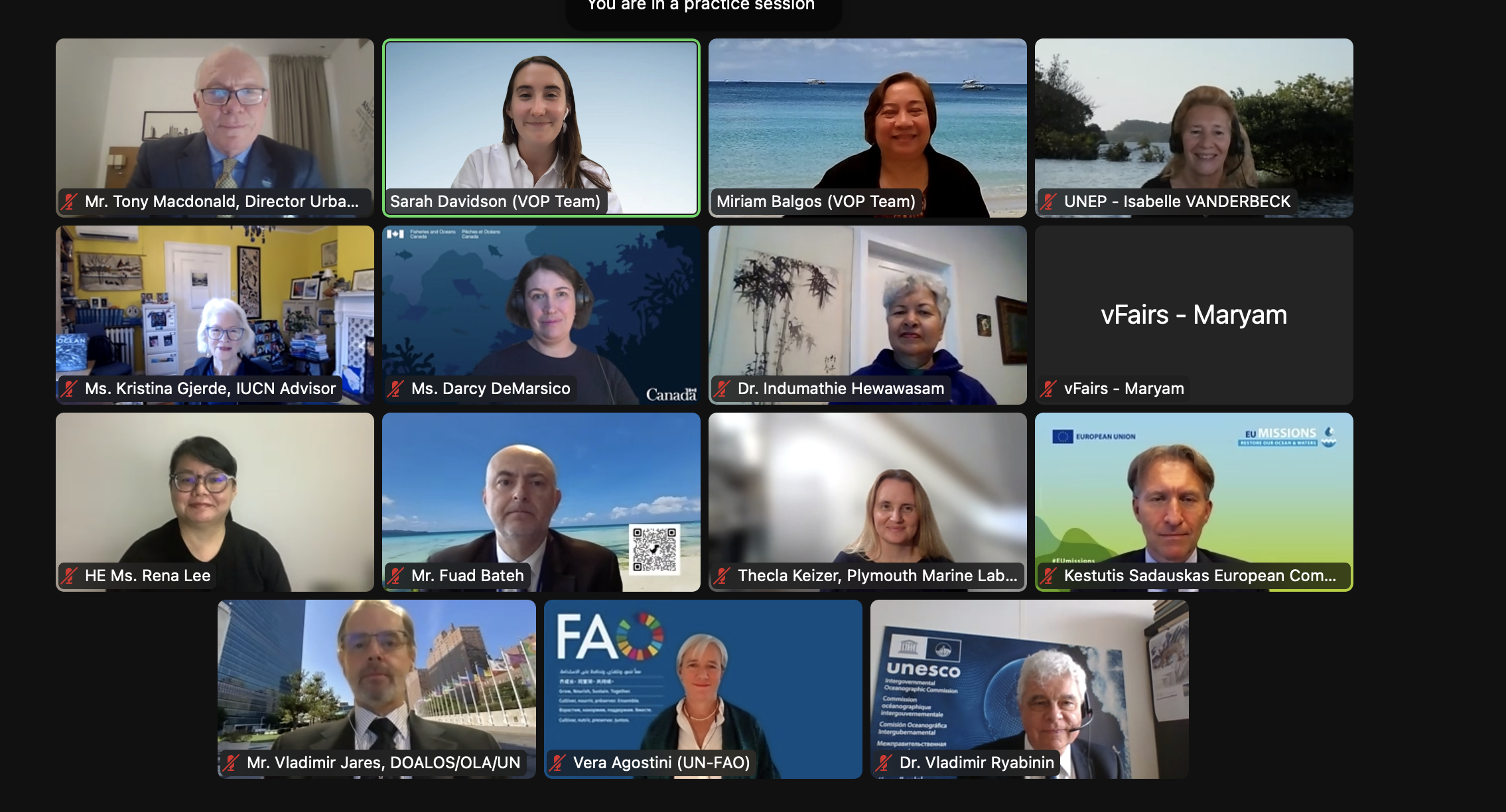
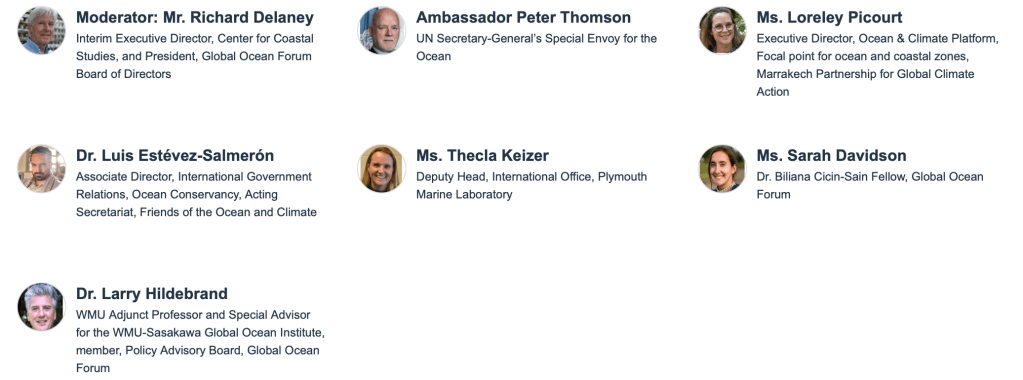
To begin the series of live events hosted by the Pavilion, co-organizers Global Ocean Forum and Plymouth Marine Laboratory launched the COP28 Virtual Ocean Pavilion Preview Event, titled Showcasing the Ocean at COP28, on 22 November 2023. The event focused on what was to come for the ocean community at COP28, providing a preview of the COP28 Virtual Ocean Pavilion and of ocean events at COP28 more generally. The event also discussed the key findings and recommendations for Parties and Non-Party Stakeholders from the launch of the ‘Assessing Progress on Ocean and Climate Action 2022-2023’ report and included speakers from GOF, PML, Ocean Conservancy, Ocean & Climate Platform, World Maritime University and the United Nations.
Designed to coincide with the opening of COP28 itself, the next two events in the Virtual Ocean Pavilion series occurred on 30 November 2023. The two events were titled COP28 Virtual Ocean Pavilion Opening Event: Integrating Ocean and Climate Action and Shifting Goals: What is the Ocean We Want, and were organized by Global Ocean Forum and Plymouth Marine Laboratory and the Gerard J. Mangone Climate Change Science and Policy Hub, respectively. The events focused on providing the argument and rationale for increasing coordination and collaboration among ocean-climate initiatives through integrated and ecosystem-based approaches and highlighted social science advances in identifying ocean goals, coordinating, negotiating, and implementing them, even as they change over time and scale, respectively.

Next in the series of events were three events held on 8 December 2023. These events were titled Connecting Generations for Ocean and Climate Action: An Online Workshop, Advancing the Coral and Mangrove Breakthroughs and Marine Protected Areas (MPAs) Role in Meeting Climate Change Goals: Investigating and Protecting Blue Carbon in MPAs.
The purpose of the online workshop, organized by Nausicaa, Youth and Environment Europe and the Youth4Ocean Forum, was to draw young people and senior professionals together to identify and prioritize key challenges relating to the ocean and climate change in diverse geographical regions of the world, generate and prioritize individual and collective actions and concrete solutions that can be taken up by individuals of all ages either on their own or as a community. These key challenges and concrete action solutions will be assembled in a digital networking tool that will help build an ocean virtual community of practice in response to different thematic challenges that the ocean and climate topic is part of. The digital tool will be relevant throughout the world and free of charge and will be presented at the United Nations Ocean Conference scheduled in June 2025 in France.

In the live event titled Advancing the Mangrove and Coral Reef Breakthroughs, the Global Fund for Coral Reefs (GFCR), the Global Mangrove Alliance (GMA), the International Coral Reef Initiative (ICRI), the United Nations Environment Programme (UNEP), the United Nations Development Programme (UNDP), and the High-Level Climate Champions (HLCC) presented the Coral Reef Breakthrough and the Mangrove Breakthrough agendas. The Coral Reef Breakthrough and Mangrove Breakthrough, as part of the 2030 Breakthroughs Agenda, aim to mobilize action to halt loss, restore, protect, and ensure sustainable finance for these threatened and valuable ecosystems. The event featured state representatives, Climate Champions, and globally renowned scientists to hold panel discussions on key issues related to coral reef and mangrove conservation and restoration in order to accelerate awareness of the Breakthroughs and promote climate action.

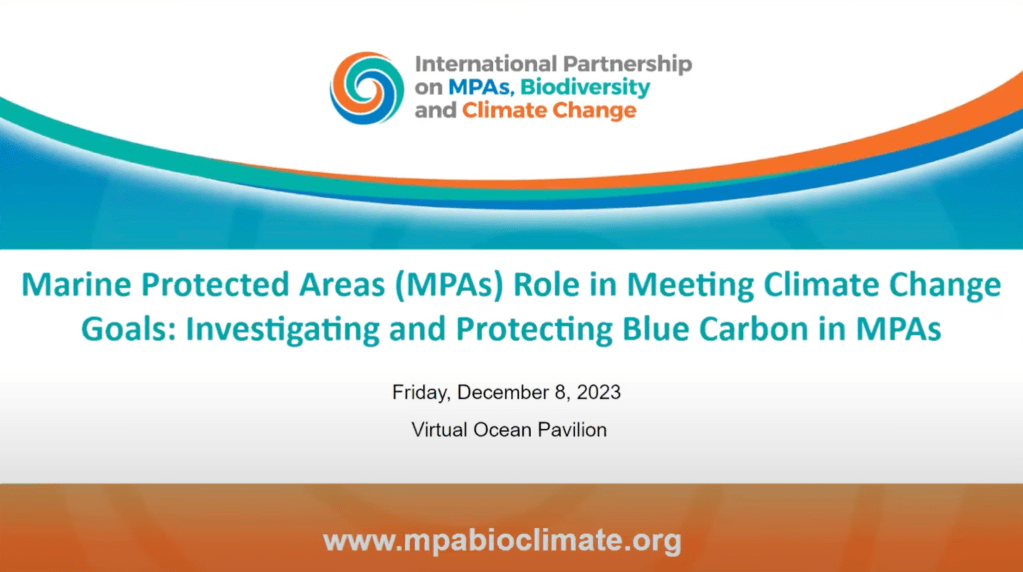
The third event held on 8 December, Marine Protected Areas (MPAs) Role in Meeting Climate Change Goals: Investigating and Protecting Blue Carbon in MPAs, provided evidence to national and international policy makers on the role MPAs can play to conserve biodiversity, mitigate climate change, and to adapt to climate change in order to inform and promote the role of MPAs as nature-based solutions to meet Nationally Determined Contributions. This session shared methodologies to assess blue carbon habitats, blue carbon habitat restoration case studies, and methodologies to understand existing protection and potential gaps and was organized by the International Partnership on MPAs, Biodiversity and Climate Change.
To conclude the live events hosted by the COP28 Virtual Ocean Pavilion, two events were held on the last day of COP28, 12 December 2023. The first event was titled Managing and Protecting Ocean Spaces for Climate, Biodiversity and People by 2030 and was hosted by World Maritime University. This event discussed the challenges and opportunities for marine protected areas and marine spatial planning to address the biodiversity and climate crises, the role of ocean carbon in the Global Stocktake, and implications for science, policy, management, and capacity building.
The second event held on 12 December and the final event in the Virtual Ocean Pavilion series was titled COP28 Virtual Ocean Pavilion Closing Event: Climate Change and the BBNJ Agreement was co-organized by Global Ocean Forum and Plymouth Marine Laboratory. This high level event discussed the collaborative and cooperative approaches that are being used to progress the ocean in the climate, biodiversity, and sustainable development agendas. This event capped a series of live events organized by the Global Ocean Forum and Plymouth Marine Laboratory which focus on the theme “Integrating Ocean and Climate Action” and underscored the opportunity provided by the adoption of the new BBNJ Agreement in June 2023 and its signing by over 80 countries in September 2023 to explore the mitigation and adaptation potential of the vast high seas, along with its ecosystems and resources. The event included high-level interventions, personal experiences and messages across the age spectrum and gave examples of collaborative undertakings at various levels that may be applicable to the ABNJ as well as discussing next steps as countries begin to ratify and implement the BBNJ agreement. The session concluded with a review of the role and accomplishment of the COP28 Virtual Ocean Pavilion in engaging and reaching out to those not able to attend COP28 in person, indeed in its role of democratizing the ocean at COP28 and promoting unity and inclusivity.
Exhibits
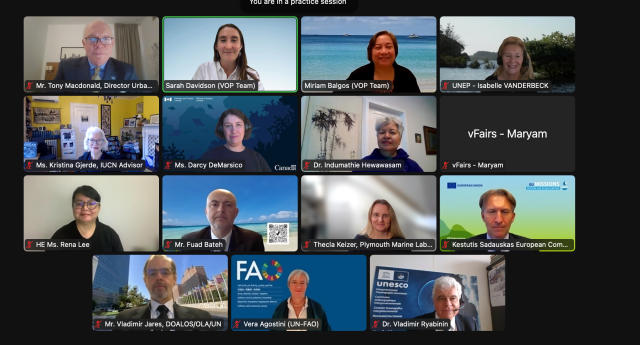
Twelve diverse and wide-ranging exhibits were featured in the COP28 Virtual Ocean Pavilion exhibit hall and were a main draw to this year’s Pavilion. The 12 exhibition booths were used by collaborating partners and sponsors to showcase their activities and resources on ocean and climate action. The booths provided access to information that attendees were able ‘take away’ in their virtual delegate bags as well as venues for informal meetings with experts and networking among exhibit hosts and attendees. For more information about the booths, click on the booth titles below or read the COP28 Virtual Ocean Pavilion Summary Report.

COP28 Ocean Events Tracker
The Pavilion became a gateway to COP28 ocean-related events through the COP28 Ocean Events Tracker which was organized by the Global Ocean Forum and the Plymouth Marine Laboratory in collaboration with virtual platform provider vFAIRS. Pavilion attendees were invited to register their events through a tracker form. The entries then became part of a calendar of COP28 ocean events accessible through the Virtual Ocean Pavilion and based on information gathered through the tracker, by the Virtual Ocean Pavilion team and by various other organizations that conducted their respective programs of ocean-related events during the COP. There were over 300 unique ocean-related events included in the COP28 compilation, showing an increase of approx. 100 events when compared to the COP27 Virtual Ocean Pavilion Ocean Events feature.

Treasure Trove
The COP28 Virtual Ocean Pavilion Treasure Trove was a resource updated daily which highlighted a collection of presentations, ocean videos, art and photos, ocean and climate stories, reports, and other publications from around the world.

Highlights from the Treasure Trove included daily updates from COP28, spotlight features of Virtual Ocean Pavilion exhibit booths, original art generated by questions posed to VOP registrants, a review of the final COP28 agreement and notable outcomes, and other news from across the ocean-climate nexus.
Quiz
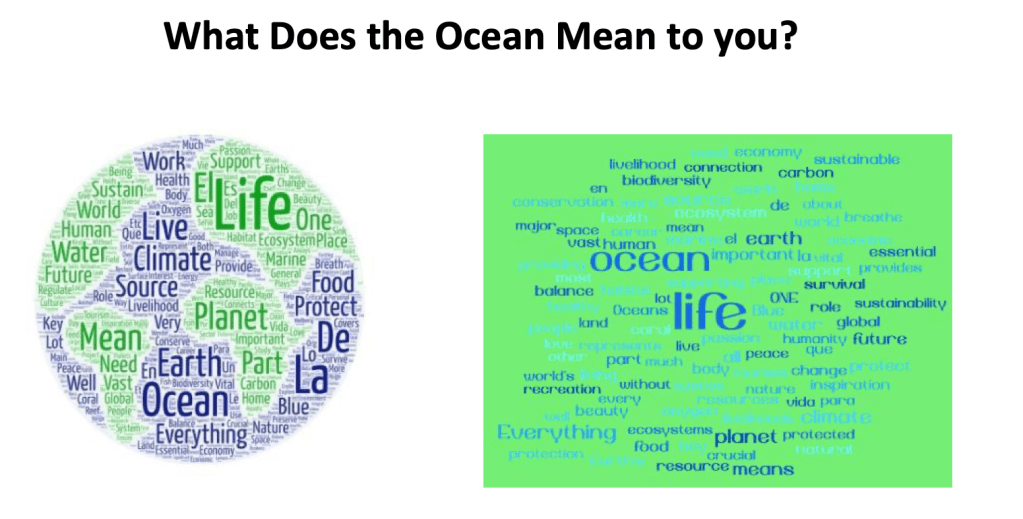
This year’s Pavilion included a Pavilion Quiz as a new feature, designed to increase engagement and allow attendees to earn a certificate. The quiz included questions specific to the COP28 Virtual Ocean Pavilion, as well as questions about COP28 and the ocean-climate nexus more broadly.

Youth-led Interviews
To provide a platform for the younger generation to get involved in ocean and climate negotiations, the COP28 Virtual Ocean Pavilion partnered with several youth-focused organizations to connect with individuals interested in conducting interviews over the course of COP28. The aim of the interviews was to allow Virtual Ocean Pavilion attendees to gain insights about COP28 from Party negotiators and key stakeholders while also creating opportunities for involvement for interested youth and early career ocean professionals. Interviews from the COP28 Pavilion as well as from past Pavilions are available on the Global Ocean Forum’s YouTube channel.

OPPORTUNITY FOR FUTURE COLLABORATION: COP29 VIRTUAL OCEAN PAVILION
To help realize the ocean and climate change agenda through the Virtual Ocean Pavilion at COP29, the Virtual Ocean Pavilion co-organizers are welcoming sponsors as well as additional partners. The design of the COP29 Virtual Ocean Pavilion will take into consideration the cascade of ocean and ocean-related events in 2023-2024, the COP29 priorities, as well as the lessons learned in the development of the platform and feedback received from the survey of COP28 Pavilion attendees.
For more information, please contact:
Miriam Balgos, Global Ocean Forum (mbalgos@globaloceanforum.com)
Thecla Keizer, Plymouth Marine Laboratory (tke@pml.ac.uk)
 Roadmap to Oceans and Climate Action (ROCA) Initiative
Pingback: Virtual Ocean Pavilion at the UNFCCC COP – Roadmap to Oceans and Climate Action (ROCA) Initiative