Connecting All on Our Incredible Blue Planet
30 August – 18 November 2022

The COP27 Virtual Ocean Pavilion was held from August 30 until November 18, 2022. The Pavilion opened during Africa Climate Week (August 29-September 2, 2022, see more information below) and covered the duration of the 27th session of the Conference of the Parties to the United Nations Framework Convention on Climate Change (UNFCCC COP27, 6-18 November 2022, see more information below). With the overall coordination by the Global Ocean Forum in close partnership with the Plymouth Marine Laboratory, it was co-organized by the GOF, PML, the Intergovernmental Oceanographic Commission of UNESCO, the Food and Agriculture Organization of the United Nations (FAO), One Ocean Hub, and the Ocean & Climate Platform, together with 28 collaborating partners. The Pavilion drew 4,187 registrations, representing 115 countries, of which 1,313 (31%) logged in to visit the Pavilion and participate in its various features within the duration of the Pavilion and through post-event hosting that allowed on-demand use up to December 18, 2022.
AFRICA CLIMATE WEEK
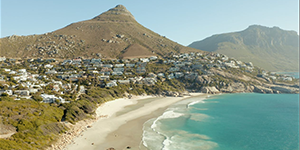
Africa Climate Week (ACW) 2022 took place from August 29 to September 2 in Gabon, as part of an ongoing series of Regional Climate Weeks on the road to COP27. It was hosted by the Government of Gabon and organized by UN Climate Change in collaboration with global (UN Development Programme, UN Environment Programme and the World Bank Group) and regional (the Africa Union, the Africa Development Bank (AfDB), the UN Economic Commission for Africa (UNECA) and UN Gabon) partners.
ACW 2022 acted as a platform to facilitate collaboration and to explore resilience against climate risks; the transition to a low-emission economy; and partnerships to solve pressing challenges. This is following the recognition of Regional Climate Weeks by the Glasgow Climate Pact agreed at COP26 as a platform for strengthening government and stakeholder response to climate change and continuing the theme of regional collaboration as a driver of global progress that emerged during COP26. Along with the other Regional Climate Weeks, ACW 2022 built on the momentum generated during the virtual events of the 2021 Regional Climate Weeks and will continue to provide a voice for regional stakeholders and promote ambitious solutions for advancing climate action, addressing social inequalities and investing in development that is beneficial to both nature and humanity.
UNFCCC COP27
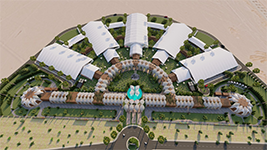
The UNFCCC COP27 was held in Sharm El-Sheikh, Egypt, at the Sharm El-Sheikh Convention Center with events taking place on 6-18 November 2022. Egypt’s COP27 presidency vision included recognition of the need for global collaboration toward a bold and expeditious response to the ongoing climate crisis, as the window for action is rapidly closing. COP27 planned to build on the successes of COP26 and facilitate future ambition by providing stakeholders with the opportunity to come together and take the collaborative political action necessary to take on the challenge of climate change in a meaningful and impactful way for the benefit of the planet and all of humanity. The goals set for the COP by the COP27 presidency included raising ambition to achieve immediate, united action to mitigate global warming to well below 2C and to work to keep the 1.5C target alive; making the necessary progress under the COP26 Global Goal on Adaptation to enhance global climate change resilience and assist the most vulnerable communities worldwide; and following up on existing commitments and pledges to make significant progress on the pressing issue of climate finance, which is essential to meeting the goals of the Paris Agreement and for meeting the needs of developing countries.
Through the COP27 legacy, Africa aims to highlight the leadership role that it has taken in climate action by showcasing its contributions to the global movement to fight climate change; its commitment to facilitating and mobilizing climate action; and its vision of a just and sustainable future for the people of Africa and the world.
ABOUT THE COP27 VIRTUAL OCEAN PAVILION
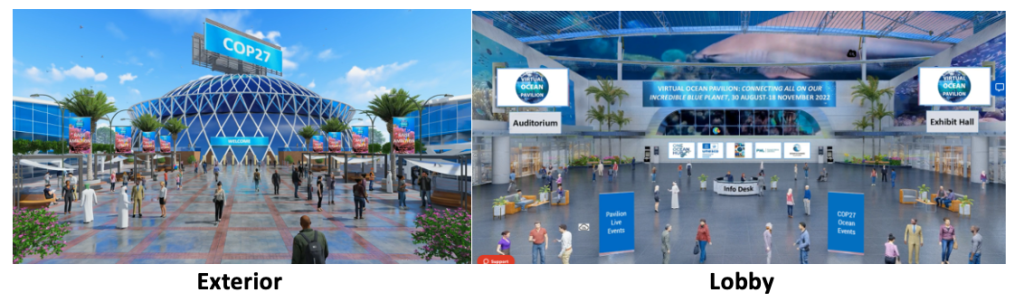
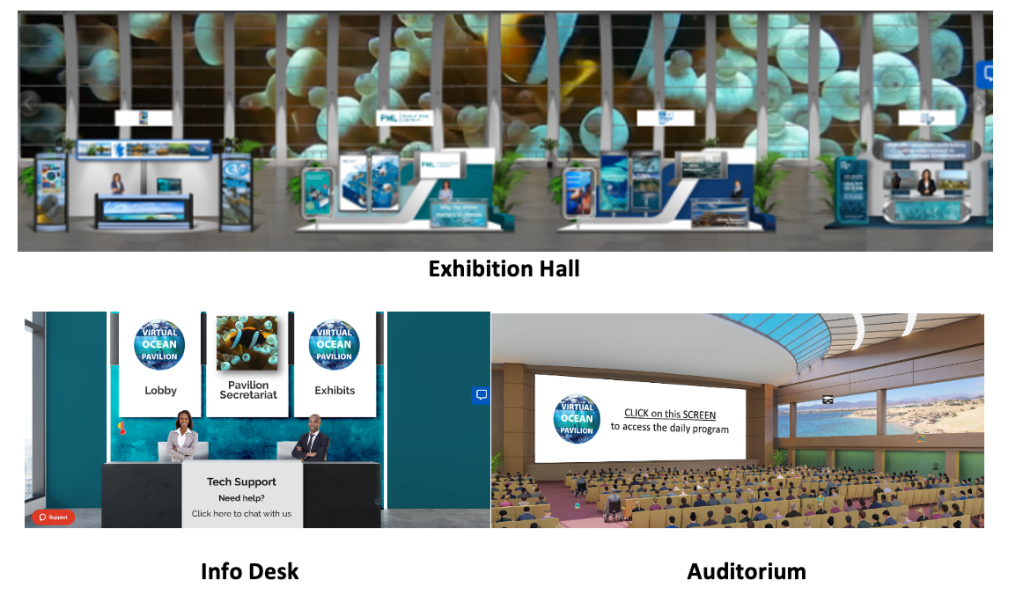
The virtual pavilion environment was designed to mimic a physical event hall with a visually stunning exterior; a lobby featuring dynamic ocean graphics where participants could navigate the platform and access features including the Ocean Events Tracker, photobooth, treasure trove, and info booth, where they could find answers to any questions about navigating the platform and accessing its features; an exhibit hall housing 30 exhibition booths; and an auditorium where visitors could attend webinars in person or view webinar recordings on demand.
The Pavilion aimed to:
- Continue to raise the profile of the ocean among members of the ocean and climate community as the Virtual Ocean Pavilion did in COP26;
- Provide a communication platform for those who are unable to participate in COP27, and other key ocean and climate conferences, in person from various parts of the world;
- Address COP27 priorities while promoting the space for ocean in the climate conference; and
- Promote cross-sectoral cooperation and collaboration on ocean-climate action at the national, regional, and global levels.
The Pavilion offered the following features:
- Panel sessions linking the ocean with the themes of the Marrakech Partnership for Global Climate Action (MPGCA) and the Subsidiary Body for Scientific and Technological Advice (SBSTA) Ocean and Climate Change Dialogue themes to provide input to these discussions (5 live days and 17 live sessions with Wordly translation into multiple languages);
- Thirty (30) exhibits including booths on major ocean-related events in 2022 showcasing national and international initiatives on ocean and climate;
- Multiple opportunities for networking and developing synergies among attendees;
- Educational and fun features on the platform and in the booths;
- A gateway to ocean and climate stories from around the world;
- Links to other ocean events at and around the COP.
Providing free registration to access live and on–demand content for the ocean of events on the road to COP27, the VOP also allowed registrants to explore virtual exhibition booths and link up with experts to learn more about the ocean and climate connection. See below for more details on why registration and attendance was encouraged!

Join live events. Enjoy unique access to Ocean Pavilion and other live events during and in the lead up to COP27 with high level speakers, UN representatives and ocean and climate experts. Wish to branch out? Here you can also find information about joining other live ocean events happening at COP27.

Explore our exhibition booths. Visit 50 ocean exhibition booths without having to walk, sail or swim anywhere! Leading ocean and climate organizations will share their activities and provide access to a wealth of information you can ‘take away’ in your virtual delegate bag – as much or little as you like!

Access on-demand events/videos. Dive in and out of a range of COP27 and other events, interviews and films at your convenience from the end of August through the whole of November.

Discover the Treasure Trove. Explore a collection of ocean music, art, games, climate stories from around the world, plus interviews and events.

Engage with experts. Meet with ocean and climate experts who will answer your questions, share their latest activities on ocean issues, and who would love to hear about your ocean interests.

Watch interviews. Fancy a deeper dive into COP27? Choose from a selection of interviews with Party negotiators and key stakeholders and gain a better insight on COP27, the discussion process and status.
PAVILION HIGHLIGHTS
Webinars
Seventeen live events were organized and conducted in the lead up to and during COP27 as part of the Pavilion’s program of live events: 2 were held on August 30 during Africa Climate Week; 4 were held on November 9 on Finance and Public Education; 3 were held on November 10 on Science, Youth and Future Generations, and Resilience; 4 were held on November 14 on Aquatic Food; and 4 were held on November 16 on Biodiversity, Oceans and Coastal Zones – Mitigation and Adaptation. The live events featured eminent high-level speakers from national and regional organizations, UN representatives, ocean and climate experts and practitioners, and youth leaders from around the world. To watch recordings of these events, visit the Global Ocean Forum’s YouTube channel.
Africa Climate Week Webinars
On August 30, 2022, the COP27 Virtual Ocean Pavilion Opening Event: Raising Action: An Ocean of Prospects and Opportunities in 2022 and Beyond debuted. The event Ocean and Climate Action: Adaptation and Resilience Practices and Tools Clinic also occurred on this day and these events served the ACW purpose of providing a platform for strengthening government, intergovernmental, and stakeholder response to climate change. They aimed to discuss the prospects and opportunities presented by major ocean events in 2022 and global initiatives of the decade in raising action, ambition, unity, and finance to support innovative and collaborative approaches to mitigate and adapt to the adverse impacts of climate change and for climate-resilient development. These included, inter alia, the One Ocean Summit, the 7th Our Ocean Conference (Palau), the UN Ocean Conference, the UN Decades of Ocean Science and Ecosystem Restoration, the International Year of Artisanal Fisheries and Aquaculture, the Convention and Biological Diversity 15th Conference of the Parties, and the UNFCCC COP27 including key events in the lead up to COP27 such as the SBSTA Ocean and Climate Change Dialogue. The events also aimed to discuss regional climate risks and showcase region-specific ocean and climate solutions. Of particular note was a Special Address by Ambassador Peter Thomson, UN Secretary-General’s Special Envoy for the Ocean, on the outcomes of the 2022 UN Ocean Conference for the occasion of the Opening Event.

Finance and Public Education Webinars
Four events were held on November 9, including:
- Whose Ocean Is It Anyway? Why Ocean Heritage Matters for Climate Change Mitigation;
- Seagrass – the new frontier in blue carbon credits;
- Harnessing Finance for Addressing Climate-Ocean Change; and
- Communicating Ocean Science for Climate Action.
This day included the most-watched event, which was organized by Fauna & Flora International in collaboration with Akdeniz Koruma Dernegi, Blue Ventures, Project Seagrass and titled Seagrass – the new frontier in blue carbon credits? This event brought together an expert panel of scientists and practitioners who are working with seagrass systems across the world. Talks included case studies from Turkey, Kenya, Madagascar and the UK, with each panel member delivering a short talk on their specialist topics and country case study. This was followed by a broader discussion of the lessons learned, likely next research steps, and best practice for this emerging area of work.
Webinars on Science, Youth, Future Generations and Resilience
On November 10, the Virtual Ocean Pavilion hosted Indigenous Peoples, Traditional Knowledge, and Ocean-Climate Action, a panel which practiced the art of listening through the stories and experiences of traditional and Indigenous knowledge holders from Namibia, Madagascar, Ghana, and South Africa. The panel encouraged a short discussion on participants’ main take-aways, reflections, feelings, and thoughts after listening to the stories and interventions, and reflected on how different project methodologies can bridge the gap between traditional knowledge, intangible ocean heritage, and climate action. Also held on this day was a session titled Spotlight on Coastal Areas in Small Island Developing States: From Vulnerability to Resilience, which presented data and key findings of novel studies commissioned by FAO on climate change impacts on marine resources harvested in SIDS and their implications for nutrition and food security, as well as on the distinct coastal conditions and hazards, and relevant areas for adaptation interventions in SIDS. A panel of experts also discussed responses and opportunities to address climate vulnerabilities and increase resilience of aquatic food production along the coastlines of SIDS. The final session of the day was titled Youth Meaningful Engagement in Ocean-Climate Negotiations and Expectations for COP27, hosted by the Youth4Ocean Forum and Youth and Environment Europe (YEE). In this youth-led discussion, young ocean-climate advocates and experts shared expectations, priorities, and goals for ocean-related issues to be discussed during the COP27 negotiations, and presented a vision of what meaningful engagement means to them in the context of ocean-climate international decision-making processes.
Live Day on Aquatic Food
On November 14, the Virtual Ocean Pavilion hosted a live day on Aquatic Food, organized by the FAO, One Ocean Hub, and European Bureau for Conservation and Development (EBCD) in collaboration with other partners. It was the first time that a day was dedicated to aquatic food during a climate conference. The overall purpose of the day was to celebrate and to accelerate climate action coming out of aquatic food systems. The day featured messaging on how aquatic food systems are at the core of climate solutions and that blue transformation and climate transition can multiply their contribution to achieving the Paris Agreement goals while protecting human rights, reducing poverty, and ensuring food security.

Events on this day included:
- A Blue Transformation to Achieve Paris Agreement Goals;
- Fostering cooperation among relevant UN bodies to advance small-scale fishers’ human rights in the face of climate change;
- Addressing the Nexus of Climate Change, Poverty, Fisheries Livelihoods and Well-Being – Integrated approaches in the context of Small Island Developing States (SIDS); and
- Towards Net-Zero in the Aquatic Food Sector: Decarbonization Pathways for Climate-Neutral Diets.
Biodiversity and Ocean-based Mitigation and Adaptation Webinars
For the final day of webinars hosted on the Virtual Ocean Pavilion, the following events were held:
- Ecoship: A Transition Model for the Decarbonization of the Maritime Sector;
- Climate Change and Ecosystem Services in Areas Beyond National Jurisdiction;
- The Role of Nature-Positive Engineering in a Sustainable Ocean Economy; and
- COP27 Virtual Ocean Pavilion High-Level Closing Event: Raising Unity in Ocean-Climate Action.
The closing of the Virtual Ocean Pavilion webinar series came with the COP27 Virtual Ocean Pavilion High-Level Closing Event: Raising Unity in Ocean-Climate Action which discussed the collaborative and cooperative approaches that were being used to progress the ocean in the climate, biodiversity and sustainable development agendas considering the outcomes and expectations from the major ocean events of 2022. It included high level interventions, personal experiences and messages across the age spectrum and give examples of collaborative undertakings at the local to global level. The session concluded with reviewing the role and success of the COP27 Virtual Ocean Pavilion in engaging and reaching out to those not able to attend COP27, indeed in its role of democratizing the ocean at COP27 and promoting unity and inclusivity.

For more detailed information about the webinars hosted by the COP27 Virtual Ocean Pavilion, please see the COP27 Virtual Ocean Summary Report.
Exhibit Booths
The Pavilion hosted 30 exhibition booths, which collaborating partners and sponsors used to share their activities and resources on ocean and climate action, highlighting collaborative initiatives at all levels and across sectors. The booths provided access to information that attendees were able to ‘take away’ in their virtual delegate bags. Click on the names of the booths below to access the information displayed during the COP27 Virtual Ocean Pavilion. For more information about the exhibit booths hosted by the COP27 Virtual Ocean Pavilion, please see the COP27 Virtual Ocean Summary Report.
Other Virtual Ocean Pavilion Features
The Pavilion became the gateway to COP27 ocean-related events through the Ocean Events Tracker organized by the Global Ocean Forum and the Plymouth Marine Laboratory in collaboration with Comms Inc. Attendees were invited to register their events through a tracker form. The entries became part of a calendar of COP27 ocean events accessible through the Virtual Ocean Pavilion and based on information gathered through the tracker, by Comms Inc, and by various other organizations that conducted their respective programs of ocean-related events during the COP. There were over 200 unique ocean-related events included in the COP27 compilation. The tracker received a total of 617 clicks from 366 unique users.
In addition, a scavenger hunt (in which 172 visitors participated) and the photo booth (visited 241 times by 161 users) were a draw along with the Treasure Trove (which received 259 clicks from 154 users), which highlighted a collection of presentations, ocean videos, art and photos, ocean and climate stories, reports, and other publications from around the world. Other finds from the Program, Videos, and Resources tabs of the Virtual Ocean Pavilion navigation bar, provided relevant information using a broad range of format to enhance attendees’ experience in their visit to the Pavilion.
CO-ORGANIZERS, COLLABORATING PARTNERS AND SPONSORS
The Virtual Ocean Pavilion at COP27 was co-organized by the Global Ocean Forum, Plymouth Marine Laboratory, the Intergovernmental Oceanographic Commission of UNESCO, Food and Agriculture Organization of the United Nations, One Ocean Hub, and the Ocean & Climate Platform, in collaboration with many other partners from across the globe, such as:
- Monmouth University Urban Coast Institute
- Arcadia University
- Global OCean acidification Observing Netowrk
- AUDA-NEPAD
- International Alliance to Combat Ocean Acidification
- World Ocean Network
- Coastal Zone Canada Association
- Coral Research and Development Accelerator Platform
- Global Fund for Coral Reefs
- Ocean Acidification International Coordination Center
The co-organizers are welcoming sponsors as well as additional partners for hosting the Virtual Ocean Pavilion at future UNFCCC COPs. Contacts: Miriam Balgos and Thecla Keizer.
 Roadmap to Oceans and Climate Action (ROCA) Initiative
Pingback: Virtual Ocean Pavilion at the UNFCCC COP – Roadmap to Oceans and Climate Action (ROCA) Initiative